Border is where mobility, power and agency are contested daily
Border is more than just a line drawn on a map. People who lives on border areas continue to actively negotiate for movement between and within those lines.

As I returned from Chiang Mai University to attend the Forced Displacement Workshop organised by the Regional Centre for Social Science and Sustainable Development, I realised that border districts are spaces where mobility, power, and agency are contested daily. When I made this argument, I was not saying that people who do not live in the border region do not experience or contest mobility, power and agency in their daily lives. The only difference between border and non-border communities is that the contestation and experiences of border communities often become national issues, whereas these rarely happen for non-border communities.
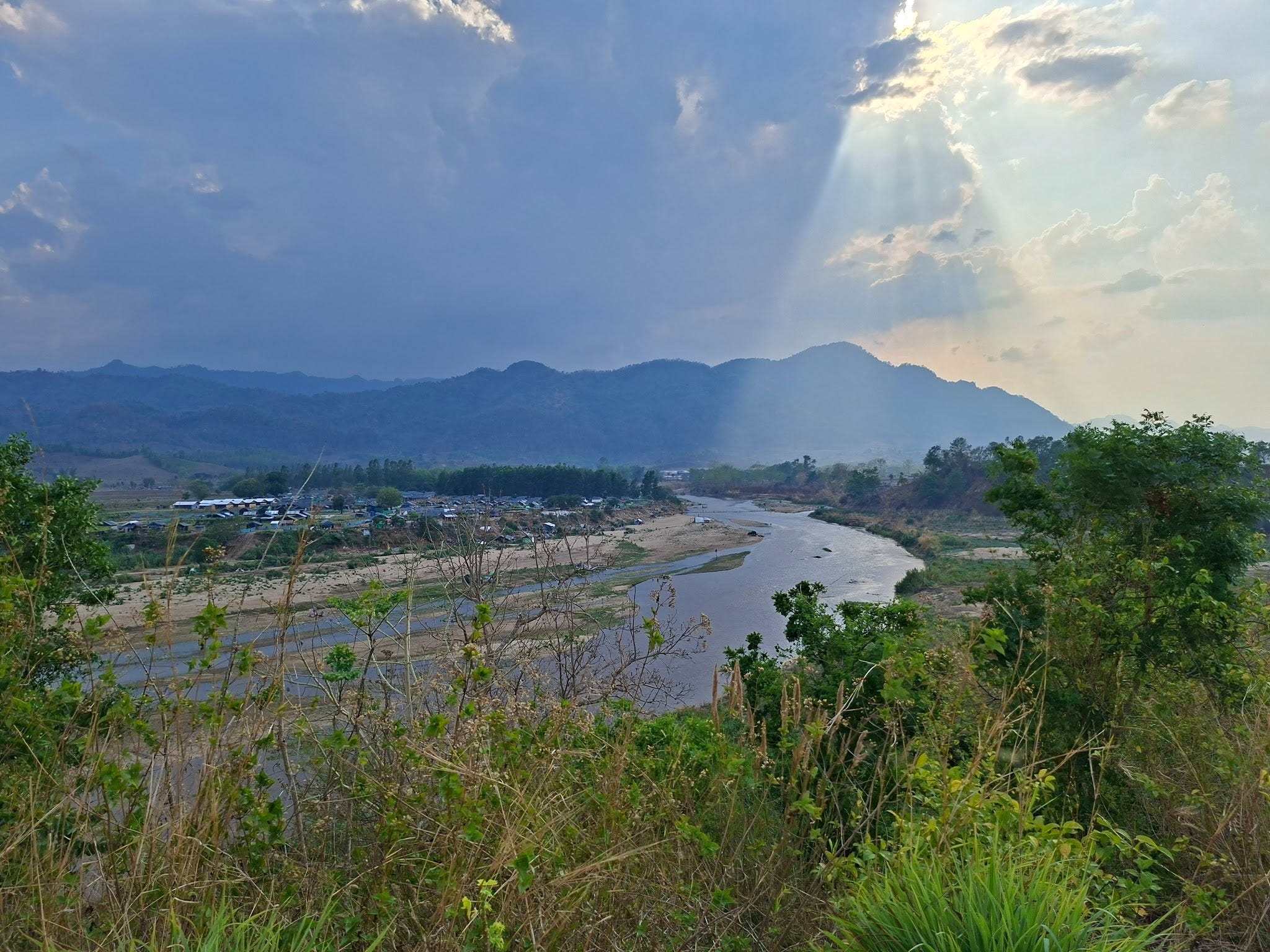
IDP camp in no-man’s land (Thai-Myanmar border)
On day 3 of the workshop, I travel to Mae Sot, a district renowned for its cross-border trade due to its proximity to the Myanmar border. If you travel around Mae Sot, you can see both Thai and Burmese script, as well as Thai and Burmese people. Before we went to Mae Sot, we were given a detailed briefing on the dos and don’ts during our stay in Mae Sot. As Mae Sot is located near the Thai-Myanmar border, there have been reports of human trafficking where people were tricked by the traffickers, stating that they had been offered a job in Thailand, and only realised after crossing the border that they were actually in Myanmar.
And as I stand right at the border between Myanmar and Thailand, I realised that the border in Southeast Asia is similar to the one I have experienced back in Europe. On a map, a border is a line drawn to divide a place into two parts, each under the sovereignty of a different nation.
And yet, at the Thailand-Myanmar border, and even at the Thailand-Malaysia border, geographical features are used to divide these sovereign territories. Rivers, which are supposed to be places and spaces that breathe life, have now become contested spaces. A space where human crossings, or even animal crossings, become forbidden and odd, by designation of authority that holds the power to define legality. Before the line was drawn, those spaces and places had always been occupied by human and non-human beings.
And right beyond the river lies an island in the middle of it. While the Thai government has now designated the island a no-man’s land (since the river itself serves as the border), I questioned whether that status would remain if the political conflict in Myanmar were resolved. France and Spain shared ownership of Pheasant Island, whose ownership changes with the seasons1.
For comparison, Ankoko Island, located between Guyana and Venezuela and awarded to Guyana in the 1899 Arbitral Award, includes a portion that is currently occupied by Venezuela2. Yet Thailand and Myanmar don’t seem to have any visible dispute over this designation of the no-man’s land.
My suspicion is that it is because of people who established a camp there, seeking refuge from the conflict they faced back home. By gazetting the island as a no-man’s land and stationing the Thai military at the riverbank, Thailand was able to ensure that those were not refugees but instead internally displaced people. It is a clever strategy to mitigate the rising pressure on your citizens and international agencies to manage refugees.
Scam centre in Schwe Kokko
The paradox of the scam centre in Schwe Kokko is even more diabolical. On my last day in Mae Sot, we were driven to China View, a café facing the Schwe Kokko scam centre on the Thai side of the border. The café is situated on the riverbank that divides Thailand and Myanmar, where, on the Myanmar side, you can see an empty boat with no passengers. I was told by the organiser that the military is always on the lookout on the Thai side of the border. And due to the increasing cases of human trafficking, the government has to put up signage informing that the river is a border between Myanmar and Thailand.
The closest village to the café is less than a 5-minute drive. And we can see that the development on the Myanmar side in Schwe Kokko is massive. It is like a city still in development. Then I was reminded when Thailand put pressure on the scam centre last year to shut them down due to the disappearance of a Chinese actor in Thailand, Thailand cut off the scam centre’s electric supply3.
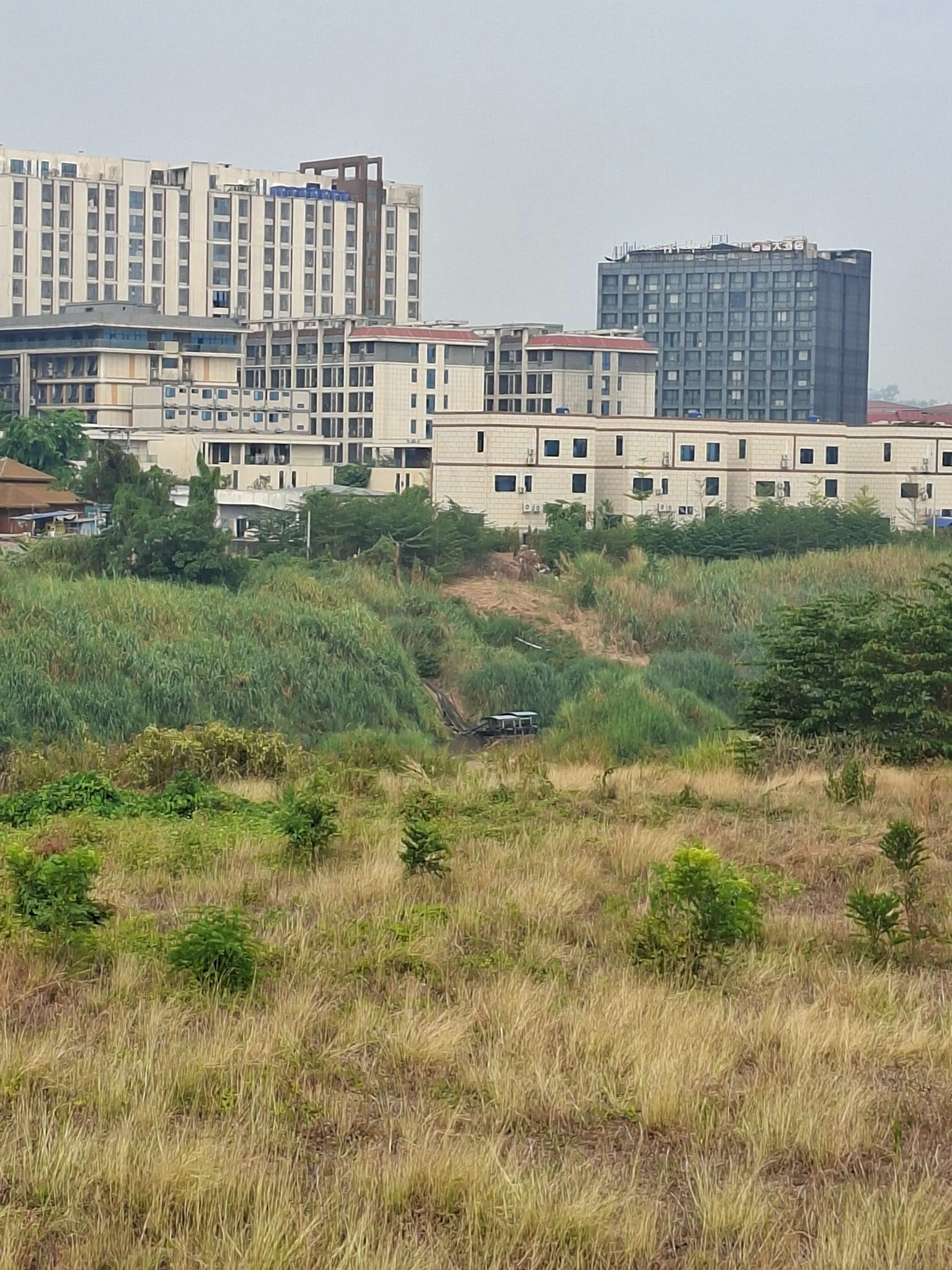
A weird contradiction
Throughout visits to Mae Sot, these practices whereby people challenge the limits of the drawn border are always present. From the IDP camp in no-man’s land to the scam centre right by the border, people continue to move between the places that were supposed to be divided into two sovereign territories. Some of these people who move were classified as undocumented migrants, some claimed themselves as refugees, and others perhaps somewhere in between.
Life continues, while people living in the border area go about their lives, responding to the authority’s measures that divide them. Either by ignoring the rules or choosing the category where their needs fit. Those are agencies. In the end, you can never totally stop mobility; you just reshape it into different forms or approaches. Just like what happened in Mae Sot.
Nadia Lukman is the Operations Director of IMAN Research.
https://www.bbc.com/travel/article/20220706-europes-island-that-swaps-nationalities