Your WhatsApp Aunties Were Wrong About Rishi Sunak
From 10 Downing Street to Kuala Lumpur: Why the illusion of "token representation" is failing a generation of Malaysian Indian youth.

When former Prime Minister Rishi Sunak was elected to office as the UK’s first South Asian leader, there were cheers among the Indian diaspora. I remember the flood of WhatsApp messages from aunties and uncles on the other side of the globe, cheering his win. Following a decade of austerity, Brexit, and the rapid succession of leaders, there was hope that this new leader, one who didn’t look like the previous ones, would steer the country in a positive direction. More pressingly, he looked like so many Britons and carried the story of immigrant parents, someone who went to the best schools and even attended Oxford University.
Rishi Sunak’s very position at the top post at 10 Downing Street was a representation of a British Indian who had made it to the upper echelons of the predominantly white British elite policymakers. There was this weight of having a British South Asian lead the country. The underlying feeling of pride and hope that things would be different under his premiership, the assumption that having a leader who looked like you could advocate for your rights.
The reality, however, was far from this. Rishi Sunak grew up in these elite circles. The leader of the Conservative Party at the time, and by default the Prime Minister, did not automatically mean he would advocate for the South Asian community or immigrants. He had a strong negative stance on both legal and illegal migration into the UK. Furthermore, while many British citizens struggled with the cost-of-living crisis and faced a 25% tax rise, his family was subjected to financial scrutiny during this time when his wife claimed non-domicile status, meaning she did not have to pay UK taxes on income earned elsewhere. This was a painfully stark distinction of class as a barrier that does not transcend ethnicity.
Rishi Sunak’s case raises the question of whether there is truly a need to celebrate representation and for leaders to be advocates for their respective communities. While there is merit in coming from a certain ethnic group and understanding their challenges, this painfully narrow worldview further creates distinctions among ethnic groups. It then becomes excusable for policymakers and leaders to opt out of protecting the interests of disenfranchised groups, especially in a multi-ethnic country. This leaves the community in the lurch, relying solely on these leaders to look out for their communities. It creates divisiveness and fragmentation. An every-man-for-himself mentality in political spheres can be detrimental to smaller communities as a whole in the long run. The need to elect leaders based on their ethnicity or race seems redundant, especially when looking at my own country, which is so deeply entrenched in racial politics.
Since the country’s inception, Malaysia has largely been governed by race-based parties. For the Indian community, the Malaysian Indian Congress (MIC) was part of the Barisan Nasional alliance and was considered the party that advocated for the community. Following changes in government and among Malaysian Indian political representatives over the decades, there was hope that things would change for the Indian community. From the fragmentation of the colonial divide-and-rule to now, not much has changed for segments of the community who have been left behind and not advocated for. Moreover, long-standing issues within the community have not been addressed. Decades of false promises and pretend narratives of change and reform have left Malaysian Indian youths feeling apathetic, disillusioned and defeated.
While interviewing Malaysian Indian youths for IMAN’s Kami Orang Sini Juga project, my co-researcher and I asked the youths to reflect on their feelings towards political representation in Malaysia, specifically whether they felt that enough was being done by these leaders. Many reiterated their frustrations and apathy towards politics in general, but when describing Indian political representation, there were two main camps: there is not enough of it and that it does not even matter. The dominant narrative being the latter. It is a thread that could unravel the very rigid ideas of race-based parties in Malaysian politics and the weight of youths’ sentiment for the future.
When describing a lack of political representation for Indian youth, they pointed to insufficient leaders in parliament who looked out for the community’s interests. Disproportionate representation by gender and age were two arguments that came up in our conversations, along with a need to see this change. Names like Kasthuri Patto, a former Member of Parliament, were cited as examples of leaders who pushed for change and made a substantial difference. There was also a call for young blood in politics. In this regard, representation was important to the youths.
The other side of the coin, of course, is that there is no clear push among youths who need to see Indian leaders in politics. This is in part due to the fact that they have felt let down by the previous and existing political representatives, who focus too closely on niche issues which are not representative of the entire Indian community and the various sub-ethnic groups, class stratification and their challenges. The picture painted by youths is such:
I haven’t heard of an Indian politician who’s doing a good job, to be honest. I don’t think anyone has that reputation.
When asked about Indian representatives and if they were doing enough for the community, another youth said:
Personally, I only see these faces [Indian MPs] during Deepavali.
This is the stark reality of how Malaysian Indian politicians are viewed: as figureheads to appease the community. Around the time of community festivals, there is a push by political parties and politicians to go on the ground and ensure the public in the constituency remembers their names and faces. It banks on positive feelings within the community during a celebratory time. They are faces meant to provide comfort and a false narrative that the Indian community is being taken care of to garner their votes.
Again, the long-standing issues such as quota systems, which hinder youths from educational opportunities, fragmentation in the Indian community, negative perceptions of Indians, gangsterism, high drop-out rates, and more have gone unaddressed. The Malaysian Indian Blueprint, introduced during Najib Razak’s premiership1, was intended to address these issues. However, the plan was shelved, and the fact that youths are still addressing these concerns means we are still at square one. Currently, the Malaysian Indian Transformation Unit (MITRA) is meant to alleviate problems in the community. However, the minimal budget allocation and rapid leadership changes have been criticised in the past by MITRA’s current chairman, MP Prabhakharan. The feelings of frustration are evident when speaking to youths who are perceptive and view programmes and leadership within the Indian community as a means to an end for their vote. As described by one youth:
“It’s just temporary happiness. Sometimes from what I feel is being given not because they want to help us, but because it’s definitely heavily affecting how we vote for the government in the future.”
This frustration towards Indian representation translates into how they feel towards future elections. Youths who have never voted before feel a sense of withdrawal from politics and disillusionment that nothing will change. They are politically aware. From a young age, many were told stories of struggles facing the Indian community and the barriers they face, especially those who are at a socioeconomic disadvantage. It is for this reason that they feel this detachment. Youths have been dismissed as apathetic and uncaring towards politics, but this stems from generational influences as well as their own experiences of being constantly let down by leaders who look like them and promise them the world. They are left with the needle moving less than an inch when there is still a mile to go. Youths are more perceptive than we give them credit for.
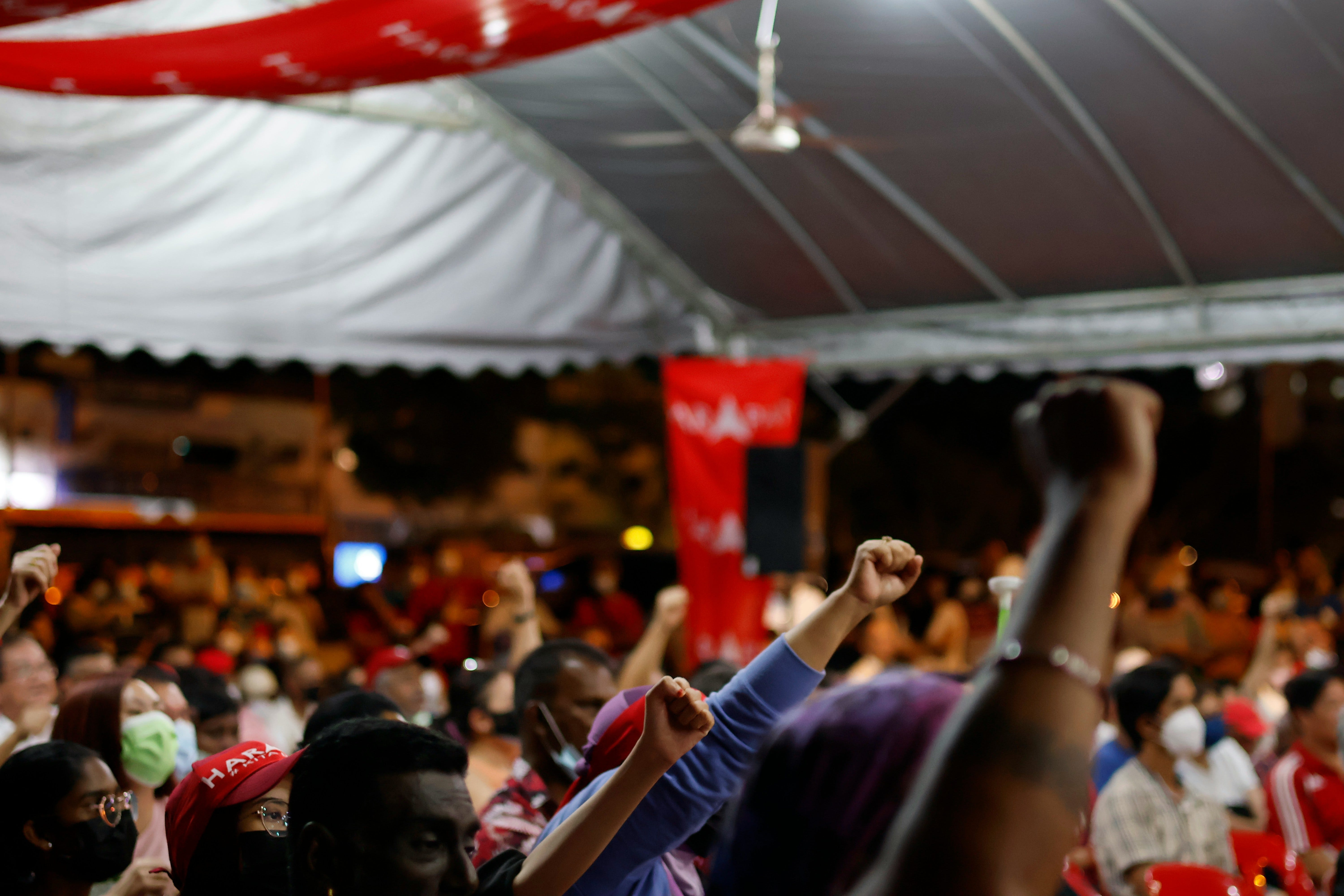
The rose coloured glasses have come off. Youths identify many of the Indian leaders as running on empty platforms with nothing but their ethnic background to appease the community and pacify them. Representation no longer matters here if there is nothing being done. Indian leaders who have a seat at the table yet do not push for change do not carry meaning in the eyes of Indian youths. Many look to leaders who will look out for all Malaysians, regardless of race. Gone are the days when the Indian community could be swayed by the allure of having an Indian leader. Youths are tired of hollow, tokenistic representation. Race-based parties are a relic of the past, with youths today looking for strong leaders who will champion their rights regardless of ethnicity. The realities of having an MP, not of Indian ethnic background, representing their constituency and the Indian community have paid off for some youths:
I mean, it doesn’t matter whatever background she is Malay or whatever. She’s like helping everyone. So I’m lucky that we voted for somebody like that. It’s all like betting, right?
Shaleen Surendra is a Researcher with IMAN Research.
The Malaysian Indian Blueprint was born of the efforts of the Hindu Rights Action Force (HINDRAF) movement and the Barisan Nasional government’s reaction to address pressing concerns faced by segments of the community and their political frustrations. Previously, various initiatives failed to materialise or effect substantial change. Published in 2017, the 10-year-long plan outlined challenges and solutions for the Indian community. Many youths we spoke to described this as a blueprint with the potential to elevate disenfranchised segments of the Indian community if executed effectively and efficiently. Following Barisan Nasional’s defeat in the 14th General Elections, the plan was shelved by the Pakatan Harapan 1.0 coalition government.
 | A guest post by
|